LUMIN Explores Forestry Sector Challenges and Opportunities at Desayuno Forestal 2026
September 18, 2026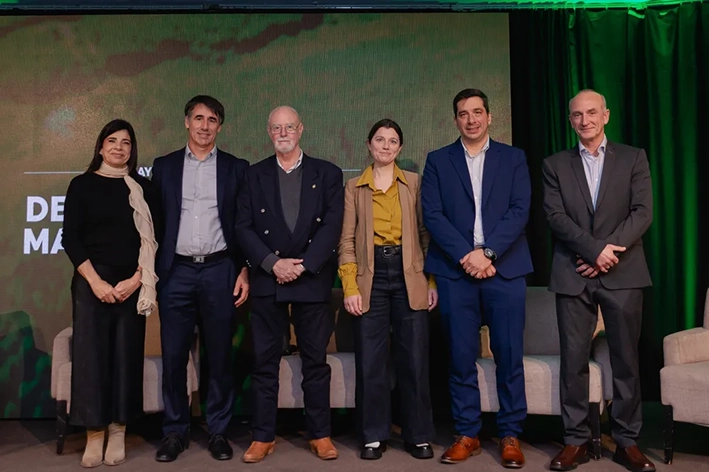
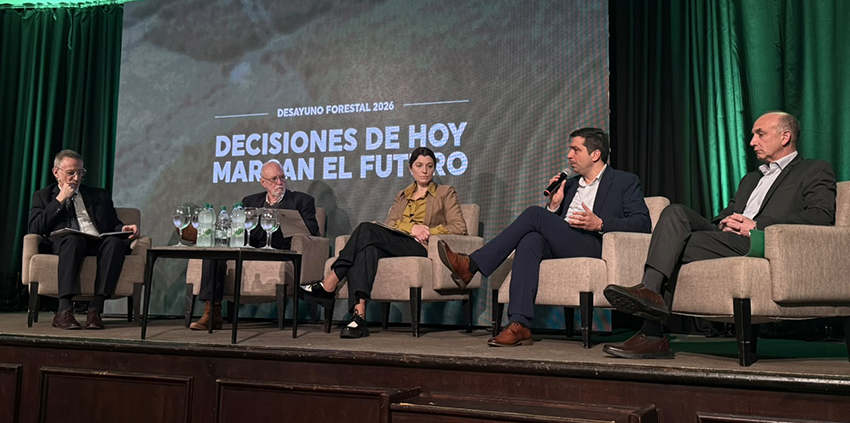
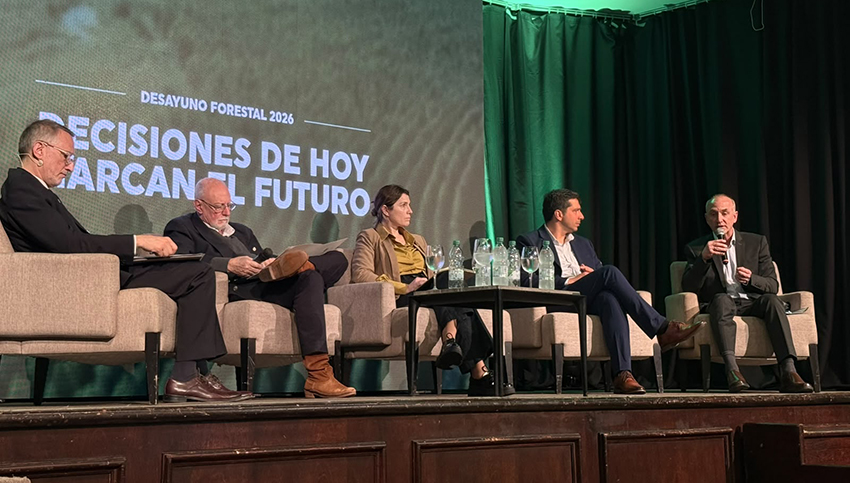
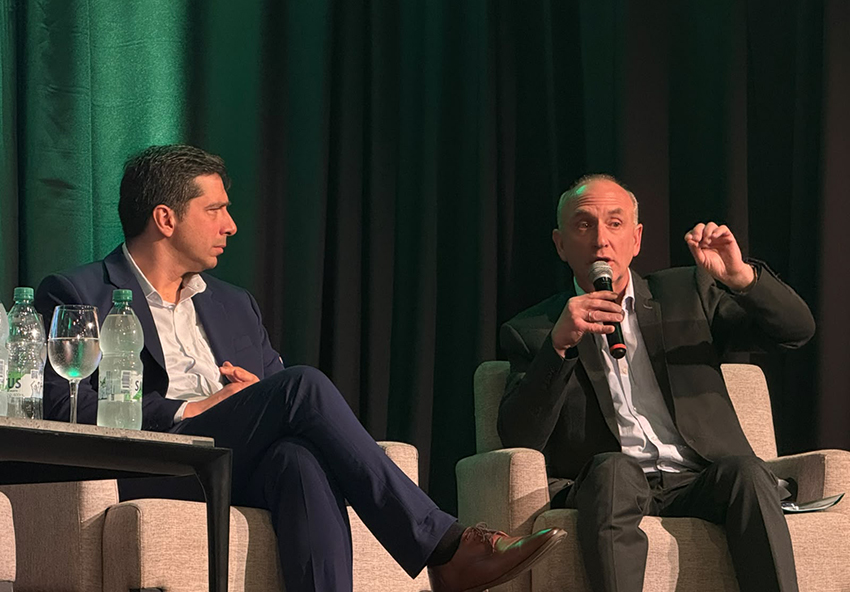
Álvaro Molinari, CEO of LUMIN and a board member of the Sociedad de Productores Forestales (SPF), joined national government officials for the closing panel of Desayuno Forestal 2026, hosted by the SPF. The discussion focused on what is needed to strengthen competitiveness, attract new investment, and support continued industrial development across the forestry value chain.
On September 1, the Sociedad de Productores Forestales (SPF), Uruguay’s forestry producers association, held its eighth annual Desayuno Forestal breakfast event. The gathering brought together national government officials, businesses, producers, and leaders from across the forestry and wood products sector to examine the industry’s main challenges and opportunities in Uruguay.
Álvaro Molinari, CEO of LUMIN and an SPF board member, joined the closing panel alongside Gastón Martínez, director general of forestry at the Ministry of Livestock, Agriculture and Fisheries; Isabella Antonaccio, national director of investment at the Ministry of Economy and Finance; and Oscar Caputi, undersecretary at the Ministry of Environment.
A central focus of the event was the presentation of the SPF report “Why Add 500,000 Hectares, and to What End?” The report takes a long-term view of forestry development in Uruguay and examines the conditions needed to turn an expansion in forested land into new opportunities for investment, production, employment, and industrial development. Among the figures presented was the Food and Agriculture Organization of the United Nations (FAO) projection that global demand for roundwood will grow by 49% between 2020 and 2050, reflecting rising demand for wood products and other forest-based applications.
Creating the conditions for growth
In his remarks, Molinari emphasized the importance of examining the factors that influence the sector’s pace of growth and continuing to create the conditions needed to sustain its development over the long term.
He highlighted predictability as a key consideration in investment decisions. Forestry requires planning over extended time horizons and working with long production cycles. Clear, efficient, and coordinated processes therefore help provide greater certainty for those considering new projects.
The discussion also explored opportunities to further streamline processes, improve coordination among government agencies, and develop tools to make administrative procedures more efficient.
Progress in these areas can help make Uruguay a more attractive destination for investment and support the future growth of a sector that has played a significant role in reshaping the country’s economy.
Strengthening competitiveness in global markets
Competitiveness was another major focus of Molinari’s remarks.
He stressed the importance of concentrating efforts on the factors Uruguay can influence to strengthen its competitive position internationally.
In particular, he identified logistics, infrastructure, energy, and the port system as essential to an industry that handles large volumes and sells much of its output in international markets.
Continued improvements in these areas can help strengthen the industry’s competitiveness, facilitate new projects, and expand the presence of Uruguayan forest products in global markets.
Expanding industrial capacity and adding value
Industrial development featured prominently in the discussion. Molinari highlighted opportunities to expand wood processing options in Uruguay and make fuller use of the available raw material.
He noted the potential to develop new industrial activities using resources already available in the country. Examples included the production of particleboard, MDF, MDP, and OSB, as well as biomass projects that use small-diameter wood.
This perspective reflects one of the main challenges raised at Desayuno Forestal: expanding the forest resource base while also creating the conditions to turn that potential into new investment, greater industrial capacity, and opportunities in international markets.
Desayuno Forestal 2026 once again brought the public and private sectors together to discuss the future of an industry of strategic importance to Uruguay and the conditions needed to support its competitiveness, attract investment, and advance industrial development.
For LUMIN, taking an active role in these discussions is part of a long-term commitment to supporting a sustainable, competitive forestry sector in Uruguay, adding value, and encouraging dialogue across the industry.
This activity supports the following Sustainable Development Goals: SDG 8, Decent Work and Economic Growth; SDG 9, Industry, Innovation and Infrastructure; SDG 15, Life on Land; and SDG 17, Partnerships for the Goals.